

NuVue Counselling
Eye Movement Desensitization and Reprocessing (EMDR)
Helping Your Brain Heal from Trauma, Anxiety, and Distressing Life Experiences
Sometimes we know we're safe, but our body doesn't seem to believe it.
You may find yourself reacting in ways that don't make sense; feeling overwhelmed, shutting down, experiencing panic, avoiding certain situations, or feeling emotionally stuck. These responses are often not signs that something is wrong with you. They are signs that your nervous system is doing exactly what it learned to do to protect you.
EMDR (Eye Movement Desensitization and Reprocessing) is an evidence-based psychotherapy that helps the brain process difficult experiences so they no longer feel as emotionally or physically overwhelming.
Unlike traditional talk therapy, EMDR works with both the brain and nervous system, allowing distressing memories to become integrated rather than continually reactivated.
What is EMDR?
EMDR stands for Eye Movement Desensitization and Reprocessing.
Developed by psychologist Francine Shapiro in the late 1980s, EMDR is recognized internationally as one of the most effective treatments for trauma and post-traumatic stress disorder (PTSD).
Today, EMDR is also used to treat:
PTSD
Complex trauma
Childhood trauma
Anxiety
Panic attacks
Depression
Grief
Phobias
Relationship difficulties
Low self-esteem
Performance anxiety
Chronic stress
Medical trauma
Attachment wounds
How Does Bilateral Stimulation Help?
During EMDR, we use bilateral stimulation, which may include:
Eye movements
Alternating tapping
Hand-held pulsers
Alternating sounds through headphones
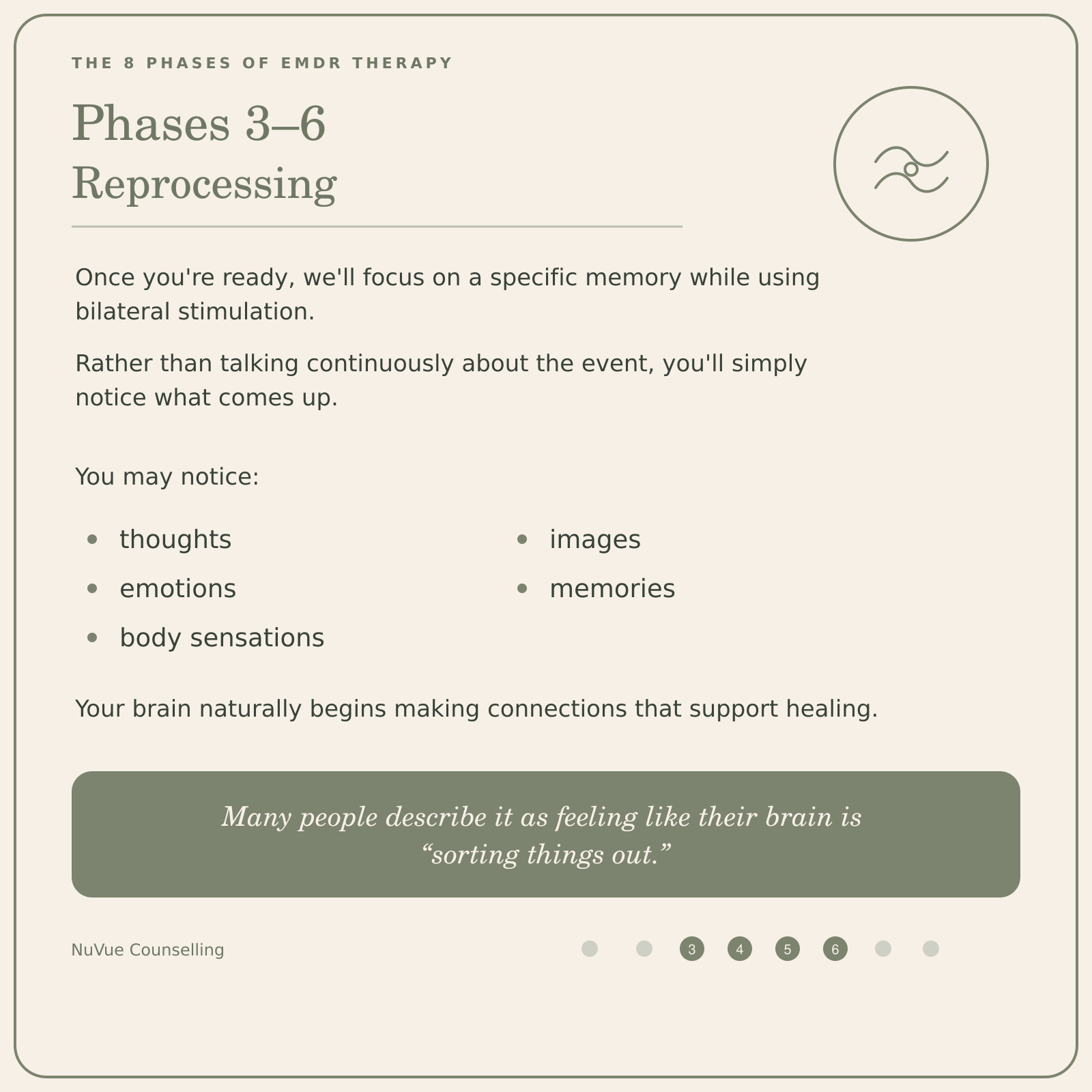
Research suggests that bilateral stimulation helps tax working memory and activate the brain's natural information processing system while keeping you connected to the present moment.
Many researchers believe it also reduces the vividness and emotional intensity of distressing memories while allowing new, more adaptive information to become integrated.

When something overwhelming happens, the brain normally processes the experience and stores it as a memory.
Sometimes, however, an experience is simply too overwhelming.
Instead of becoming a memory of something that happened, it becomes something that still feels like it is happening.
This is why certain sights, sounds, smells, thoughts, or situations can trigger intense emotions, physical sensations, or beliefs such as:
"I'm not safe."
"I'm not good enough."
"It's my fault."
"I have no control."
These memories become stored in their original emotional state.
EMDR helps the brain finish processing these experiences so they become part of your past instead of continuing to affect your present.
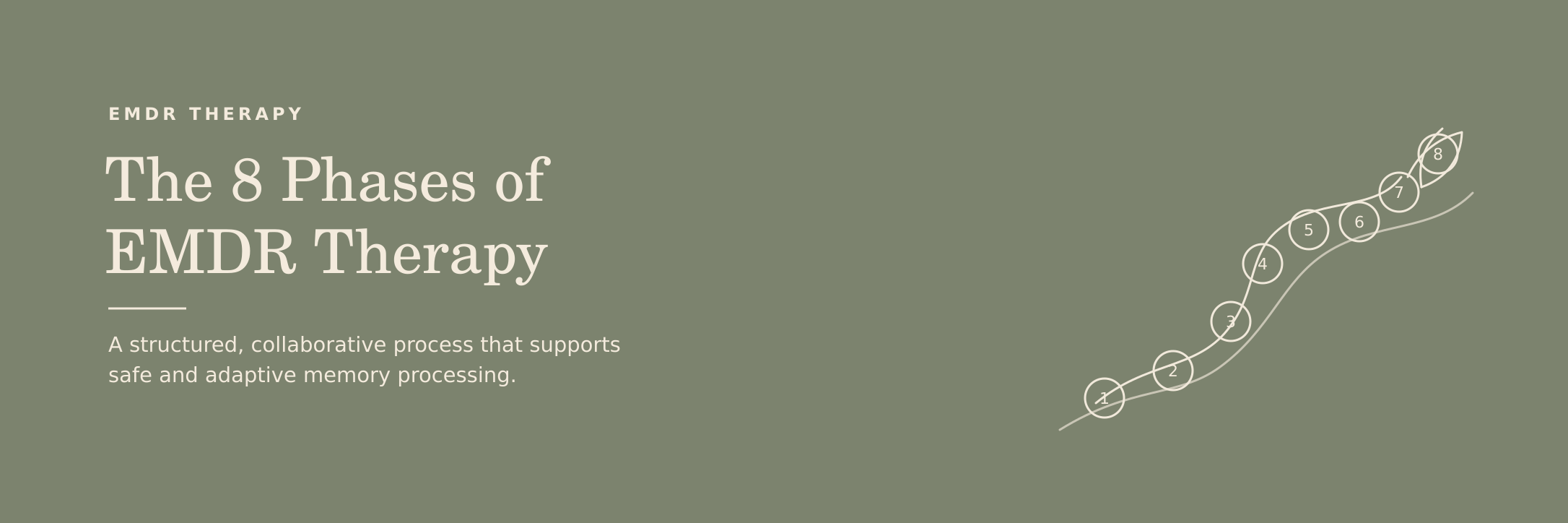
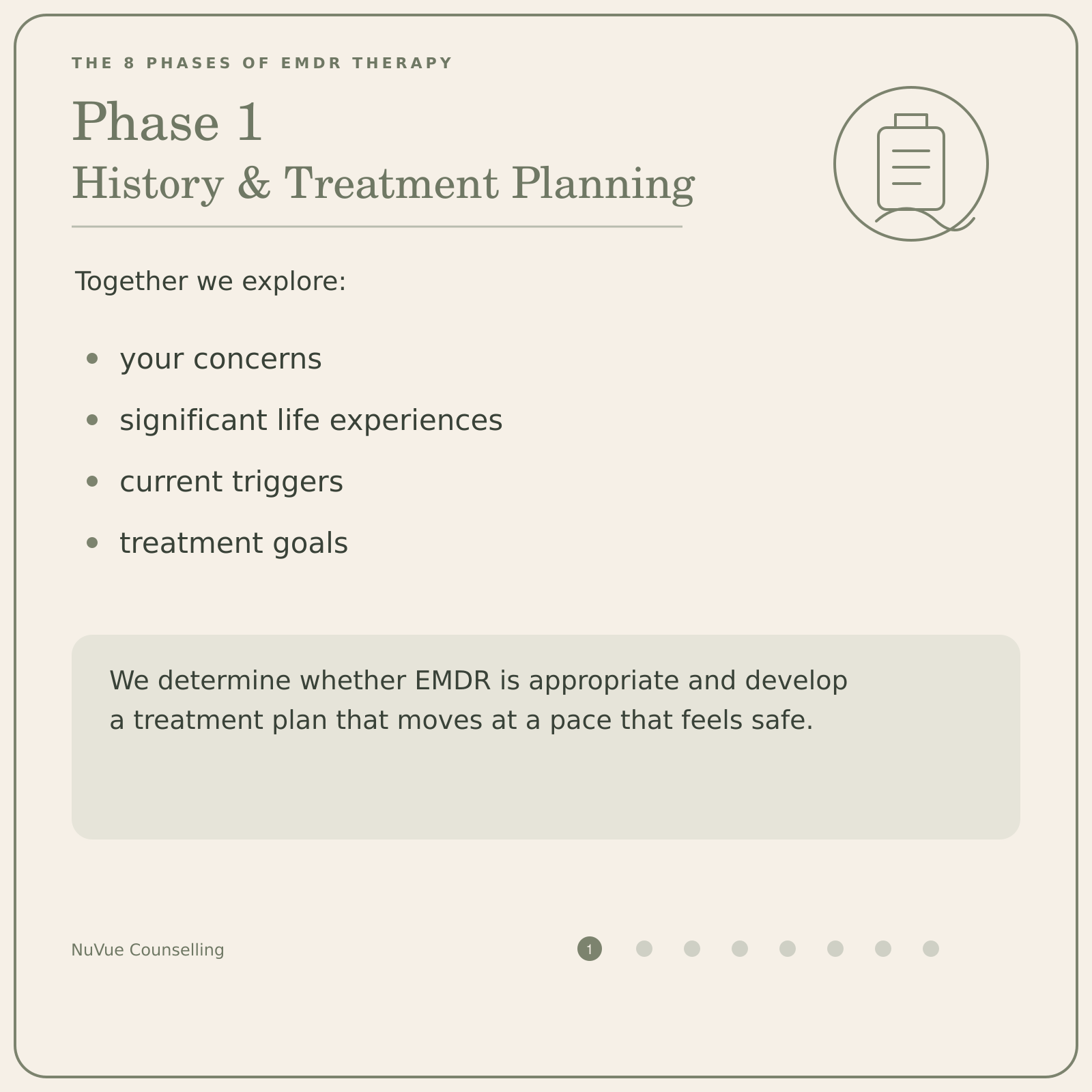
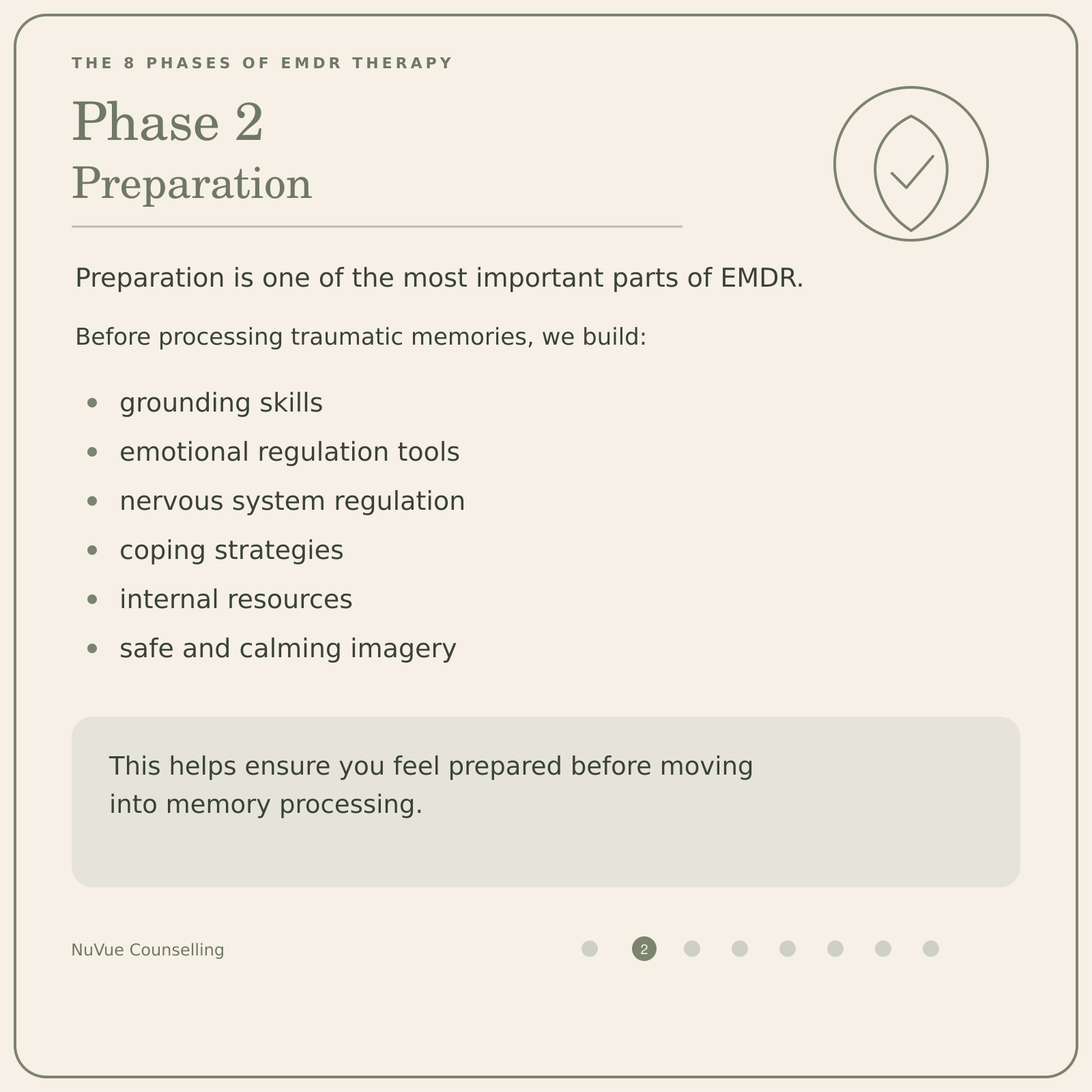
How Does EMDR Work?
Questions, answered.
Frequently Asked Questions About EMDR
-
Everyone experiences EMDR differently.
Many people describe it as:
surprisingly gentle
emotionally relieving
mentally tiring
deeply insightful
You remain awake, aware, and in control throughout the entire process.
You can pause at any time.
Many clients report that memories become:
less vivid
less emotionally charged
easier to think about
more like something that happened instead of something that is still happening
-
No.
Unlike many trauma therapies, EMDR does not require you to describe every detail of your experiences.
While some discussion is necessary, many people appreciate that they don't have to repeatedly retell painful memories.
-
Yes—when provided by a properly trained clinician.
EMDR includes extensive preparation before trauma processing begins.
The goal is not to overwhelm you.
Instead, therapy proceeds at a pace your nervous system can tolerate.
If EMDR is not appropriate at a particular stage of treatment, we may spend more time building stability before beginning memory processing.
-
Not always.
EMDR can be highly effective, but good therapy means choosing the right approach at the right time.
Some clients benefit from additional preparation before trauma processing begins.
Together we'll determine whether EMDR is appropriate based on your history, current symptoms, supports, and treatment goals.
-
There is no one-size-fits-all answer.
Treatment depends on factors such as:
the number of distressing experiences
how long difficulties have been present
current stressors
nervous system regulation
treatment goals
Some people notice meaningful improvements within several sessions, while others benefit from longer-term work.
Healing is individualized.
-
It is common to notice continued processing between appointments.
You may experience:
new memories
vivid dreams
emotional shifts
new insights
changes in how situations affect you
This is often a normal part of the brain's healing process.
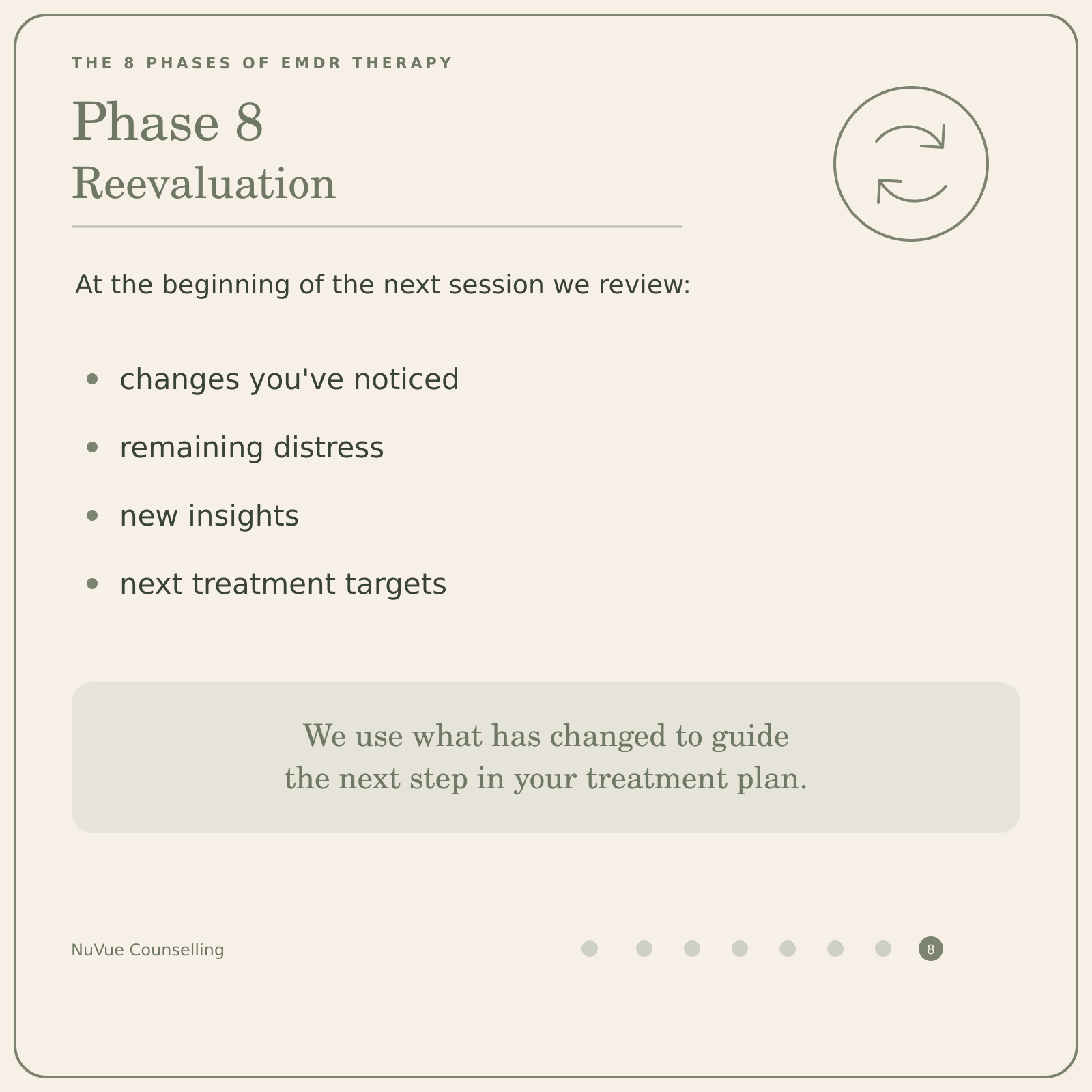
We'll discuss ways to care for yourself between sessions and review any changes together.
-
EMDR is one of the most extensively researched trauma therapies available.
Research consistently shows EMDR can reduce symptoms of:
PTSD
anxiety
depression
trauma-related distress
Many international organizations recommend EMDR as a first-line treatment for trauma.
-
No. You remain fully aware and in control throughout every session.
-
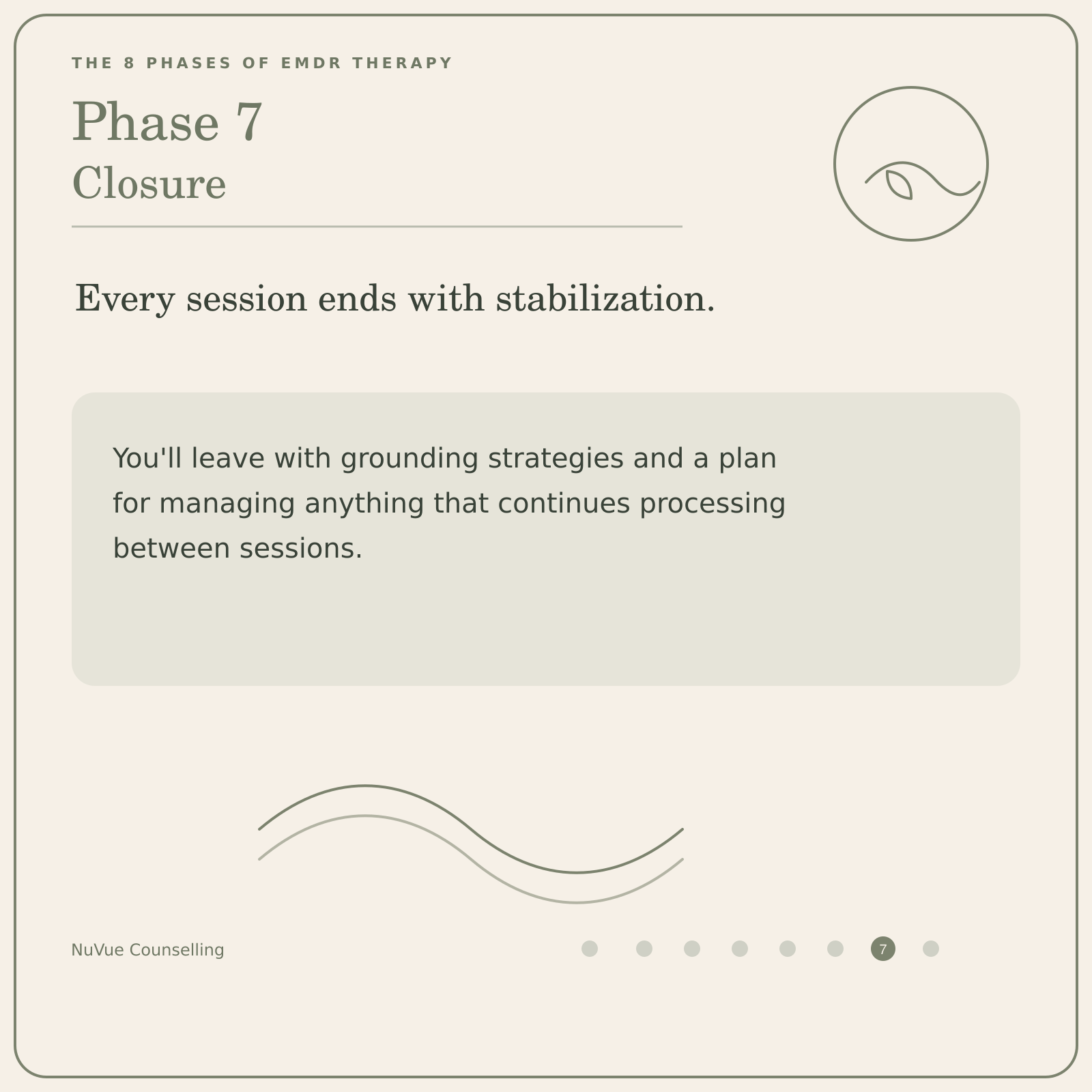
Some people notice temporary increases in emotions or memories as the brain continues processing between sessions. This is usually short-lived, and we prepare for this together with grounding strategies and ongoing support.
-
Yes. Many people seek EMDR years—or even decades—after difficult experiences. The age of the memory does not necessarily determine whether it can be processed.
-
No. EMDR can often work even when memories are incomplete or fragmented.
-
Yes. Research supports the effectiveness of virtual EMDR when appropriate safety, preparation, and technology are in place. Many clients experience meaningful progress through online sessions.